REVIEW: Dora and the Lost City of Gold: ¿Cómo se dice “family fun” en español?
- criticalwritingmovies
- Dec 2, 2019
- 3 min read
By: Mara Nelms
Want to know how to say “severe neurotoxicity” in Spanish? Yeah, me too.But if you were expecting to learn any Spanish from Dora and the Lost City of Gold, you shouldn’t hold your breath: Dora mostly ditches its educational origins, which was a letdown to me.
As a whole, Dora and the Lost City of Gold is a charming but mostly unsurprising family film, buoyed by its mockery both of itself and the adventure genre to which it belongs. Younger audiences will be pleased by Dora’s “jungle-schooled” hijinks; the adults paying for their tickets will not suffer needlessly.

The movie opens with Dora (portrayed earnestly by Isabela Moner) living her best life in the jungle, having been homeschooled there all her life. Neither her sense of fashion nor her social skills have evolved since she was six.
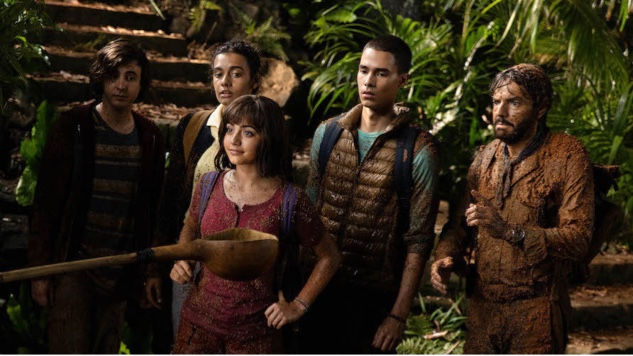
Dora’s parents send her to Mexico to attend school with her cousin, Diego (Jeffrey Wahlberg) while they hunt for Parapata, the Lost City of Gold. Dora doesn’t fit in at high school, embarrasses her more worldly cousin, and is kidnapped along with Diego and two other kids to help some treasure hunters find her parents. That’s not a spoiler, it’s the premise of the movie — but it does take up way more screen time than it should given how boring it is.
After that, the story becomes a fairly standard adventure story with fairly standard jokes: Dora and Co. face off against bad guys, the natural hazards of the jungle, and the intimidating task of taking a poo in a hole in the dirt.
Once the entire first half of the movie is out of the way, the writers seem to let loose a little. The plot goes off the pre-established rails it was following to take a windier, funnier and much more psychedelic path. At times both I and Dora wondered if we were tripping hard, but, you know, in a fun way.
The jokes improve as well, especially for those among the audience who are “in the know” enough to pick up on an almost-swear in Spanish or a bit of biting commentary about colonialism and the United Fruit Company. It’s worth brushing up on your high school level Spanish for that alone.
I have fond memories of my younger sister’s charming childhood obsession with the Dora cartoon series. (She had bedsheets. The pillowcases had pictures of Dora and Boots hugging with the words “amigos mejores” on them.) Whether the nostalgia of the viewer is that of a former fanatic like my sister or a secondhand fan like me, the film taps into it pretty successfully. Fortunately the writers were wise enough not to rely too heavily on nostalgia to carry the film — I mean, a “Dora the Explorer” reboot is a pretty niche market to begin with.
The film’s good-humored self-deprecation works more than it doesn’t, but there are a few blunders. The movie mocks the Hollywood trope of “jungle puzzles” (puzzles that adventuring protagonists have to solve to get to treasure), but it buys into them, too. It also seems to present, more or less in earnest, the racist trope of the “mystical native” — in this case the “guardianes perdidos” of Parapata, whose motivations, origins, and abilities are left entirely too unclear. The film does get points for its portrayal of the indigenous South American language of Quechua, which has between 8 and 10 million speakers today, and for fun winks to an actual Inca form of communication, khipu, which stored information on cords tied in knots. Those elements were included with a dedication to faithful representation that makes me more inclined to forgive the not-so-rosy aspects: I was particularly impressed to learn that Moner learned Quechua under the tutelage of an expert for her role as Dora.
On the whole, “Dora and the Lost City of Gold” is worth spending money on, but I’d only pay the full twelve dollars if you have an excited kid in tow. Otherwise, you may want to rent or buy it on DVD, where you can at least snort-laugh at the poo jokes in the comfort of your own home.


Comments